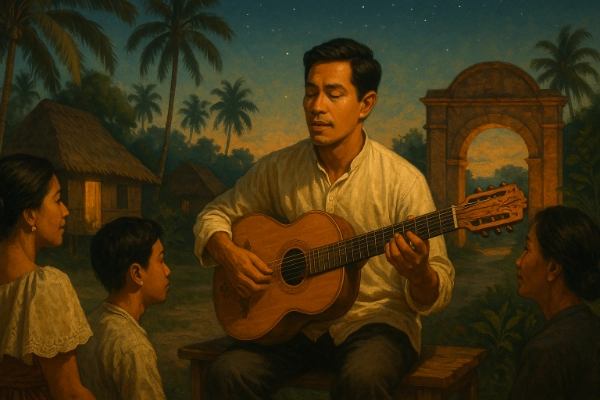
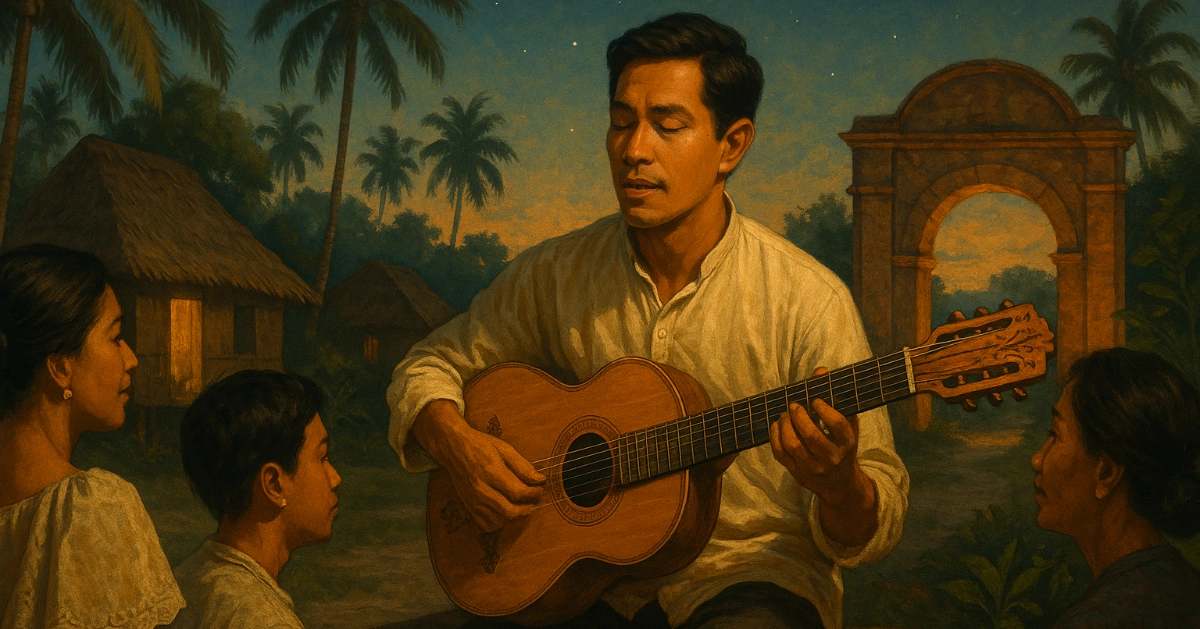
If you've ever wondered how the guitar became so deeply woven into the fabric of Filipino culture, it helps to look further back—way before the six-string classical guitar became the standard. In fact, when the Spanish first arrived in the 16th century, they didn't bring the modern guitar we know today. That version wouldn't exist until Antonio de Torres Jurado perfected it in the late 19th century.
So, what kind of guitar did early Filipinos first encounter?
The Vihuela and Baroque Guitar
The first stringed instruments brought by Spanish colonizers were likely the vihuela and later, the baroque guitar.
The Vihuela (15th–16th century)
- A close cousin of the lute, with a guitar-like shape but a unique tuning (G–C–F–A–D–G)
- It had six double courses (paired strings) and was typically fingerpicked
- Used in both aristocratic and sacred music, it laid a foundation for melodic playing styles
The Baroque Guitar (17th century)
- Much more accessible and popular than the vihuela
- Had five courses (ten strings total, arranged in pairs)
- Tuned A–D–G–B–E, very close to the modern guitar but missing the low E string
- Known for its rhythmic strumming (rasgueado) and melodic fingerpicking (punteado)
It was this five-course guitar — the baroque guitar — that truly captured the imagination of Filipinos. It was smaller, more portable, and versatile enough to accompany both sacred and folk music.
Adaptation and Innovation
Filipinos didn't just adopt the guitar; they made it their own. These early stringed instruments blended naturally with indigenous traditions. Local musicians used them in serenades (harana), kundiman, and community gatherings. Over time, local luthiers began crafting guitars with regional flair, giving birth to the Philippine guitar-making centers like Cebu and Pampanga.
But perhaps the most fascinating chapter in this story is the rise of the five-string guitar — an adaptation that Filipinos embraced well into the early 20th century.
A National Favorite: The 5-String Guitar in the 20th Century
By the 1900s, even with the six-string Torres-style classical guitar available, many Filipinos still favored the five-string guitar, echoing the older Spanish models. Why?
- Its lighter tension and fewer strings made it easier for vocal accompaniment
- Its distinct tuning fit well with Filipino folk scales and styles
- It was economical, making it accessible to the masses
During the golden age of Philippine radio in the early to mid-20th century, the five-string guitar was often heard accompanying singers or as a solo instrument. It became a musical voice of the common people — heard in both city serenades and provincial gatherings.
The Legacy of Mario Gandionco
One name from this era that still lingers in memory — though largely forgotten in print — is Mario Gandionco. A brilliant five-string guitarist, Gandionco was active from the 1950s to the 1980s and was a respected name among his peers. He often accompanied legendary Filipino singers like Pilita Corrales, and while his recordings may be scarce, his influence is etched into the stories of older generations who still remember his playing with admiration.
A Tradition Worth Remembering
Today, the five-string guitar has largely faded from the mainstream, replaced by its six-string descendant. But its role in Filipino music history remains undeniable. It bridged centuries of Spanish and indigenous traditions, inspired local luthiers, and gave voice to a nation in transition.
So the next time you strum a guitar, remember: its journey in the Philippines began long before nylon strings and classical etudes — with a five-course guitar in the hands of storytellers, travelers, and everyday Filipinos.