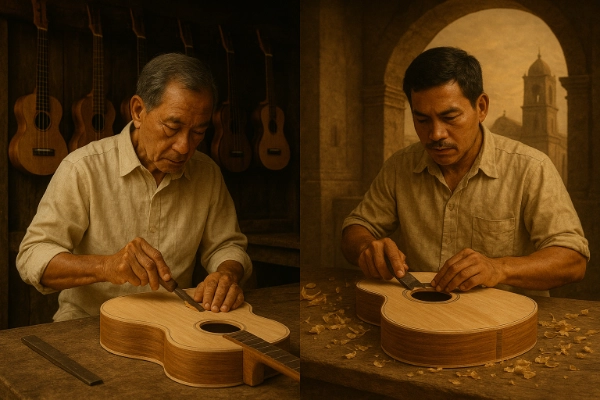
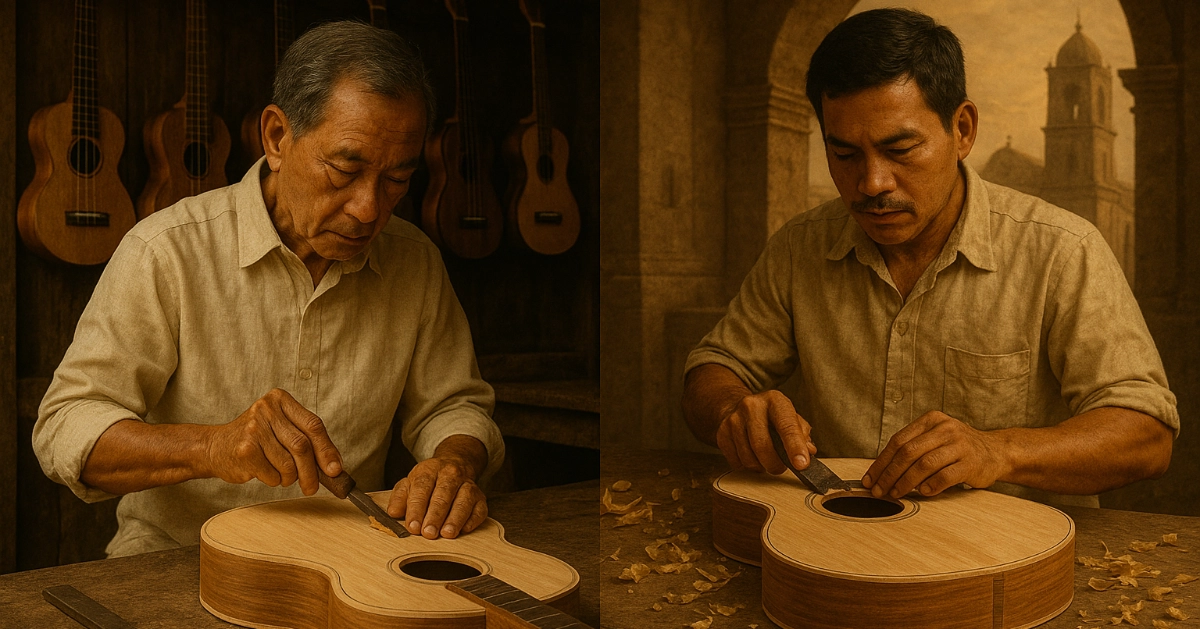
Historically, when you think "Philippine guitars," you think Cebu. The island, especially the area around Mactan, has built a strong reputation for its beautiful, handmade guitars and ukuleles. Tourists buy them. Musicians swear by them. And generations of Cebuanos have passed down the art of lutherie like a family heirloom. But lately, a different story is starting to surface—and it's coming from the north.
Some historians and local communities in Pampanga, particularly in towns like Guagua and Apalit, are claiming, "We've been making guitars, too. And maybe even before Cebu." It's a claim that's starting to gain attention, and it's sparking a bit of a friendly (and fascinating) debate.
So, what's the case for Cebu?
Cebu's story is well-documented. Spanish missionaries brought string instruments to the islands during the colonial era, and Cebuanos quickly picked up the craft of replicating and adapting them. Over time, this turned into a family-based industry, with craftsmanship handed down through generations. By the 1950s, Cebu had already become a recognized center for guitar-making, even exporting instruments internationally.
But what about Pampanga?
Here's where it gets interesting. Pampanga also had deep contact with Spanish missionaries and was known for its skilled woodworkers. Some oral histories suggest that guitar-making in Pampanga may have started in the early 1900s—or possibly even earlier. There are Kapampangan families who've been crafting guitars for generations, and they argue that they developed the tradition on their own, possibly through Manila's trade routes.
Could both be right?
Honestly, yeah—maybe they are. The Philippines is a country of islands, and it's not hard to imagine that two places could have started making guitars around the same time, each influenced by Spanish culture but developing independently of each other. It wouldn't be the first time Filipino traditions evolved in parallel across different regions.
So instead of arguing about who came first, maybe the better question is: how did these traditions grow, survive, and continue to shape our musical identity today?
At the end of the day, whether you're strumming a guitar made in Cebu or one handcrafted in Pampanga, you're holding a piece of Filipino heritage—built by hands, shaped by history, and kept alive by music.