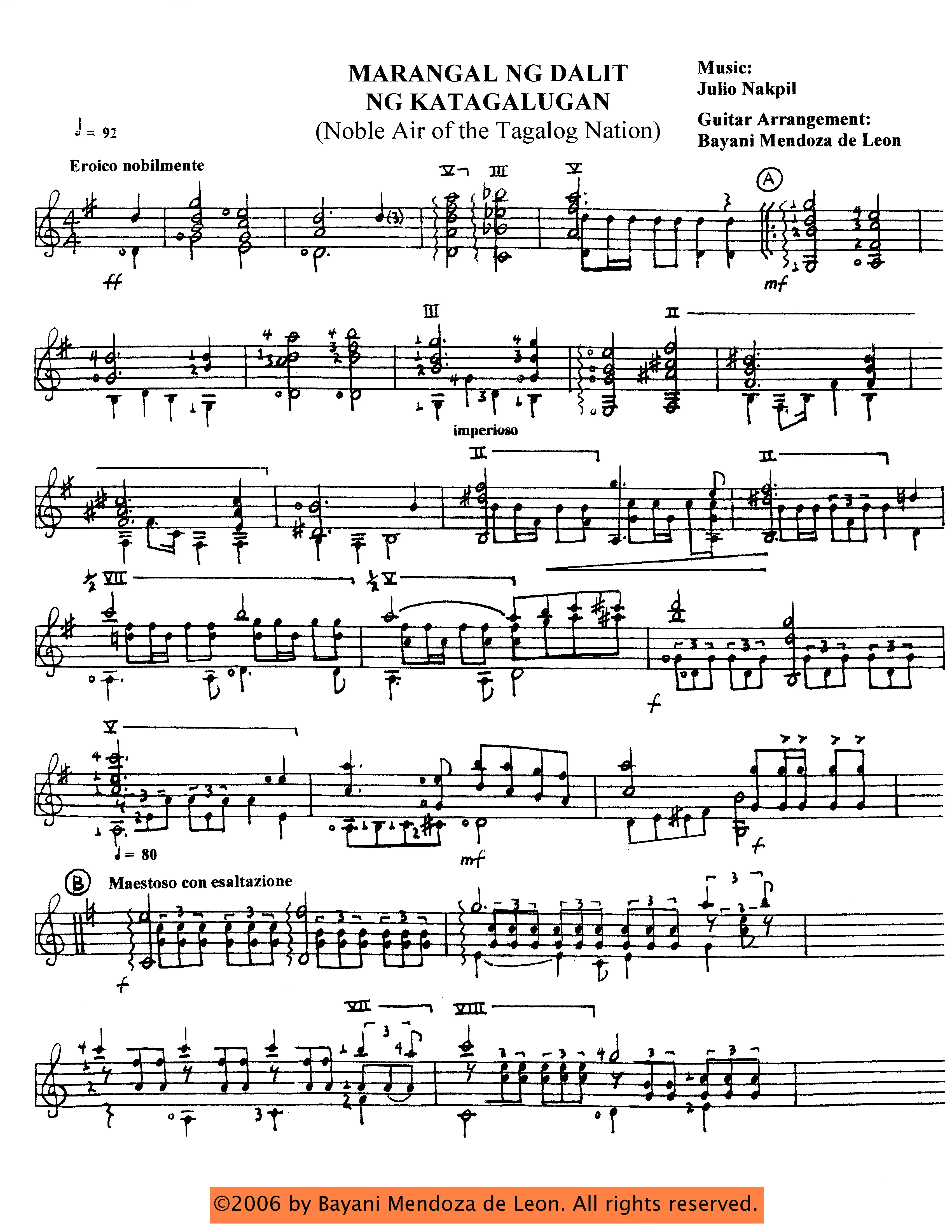
MARANGAL NG DALIT NG KATAGALUGAN
(Noble Air of the Tagalog Nation)
In 1896, Julio Nakpil, musician and revolutionist (1867-1960), composed a national anthem entitled "Marangal na Dalit ng Katagalugan," with lyrics by him, at the request of Andres Bonifacio, the Supremo of the Katipunan, the Filipino patriotic revolutionary society.
However after the assassination of Bonifacio, General Emilio Aguinaldo did not declare it the official anthem, preferring the "Marcha Filipina Magdalo," a composition by his town mate from Cavite, Julian Felipe. This march became the present day Philippine National Anthem, "Lupang Hinirang." The term "Tagalog" defined all persons born in the archipelago, whether Bisayan, Ilocano, Pampango, etc. Therefore the Tagalog nation or KATAGALUGAN consisted not only of Tagalog speakers but included all those who grew up in the Philippines, regardless of ethnolinguistic classification and ancestry. At the time, the term "Filipino" applied solely to Spaniards born in the archipelago.
Nakpil's anthem is imbued with a noble sentiment, more aesthetically satisfying and more profound in its patriotic impact. Had Bonifacio not been assassinated, it would have been the national song that could galvanize the Filipino masses towards a deeply abiding love for their country.