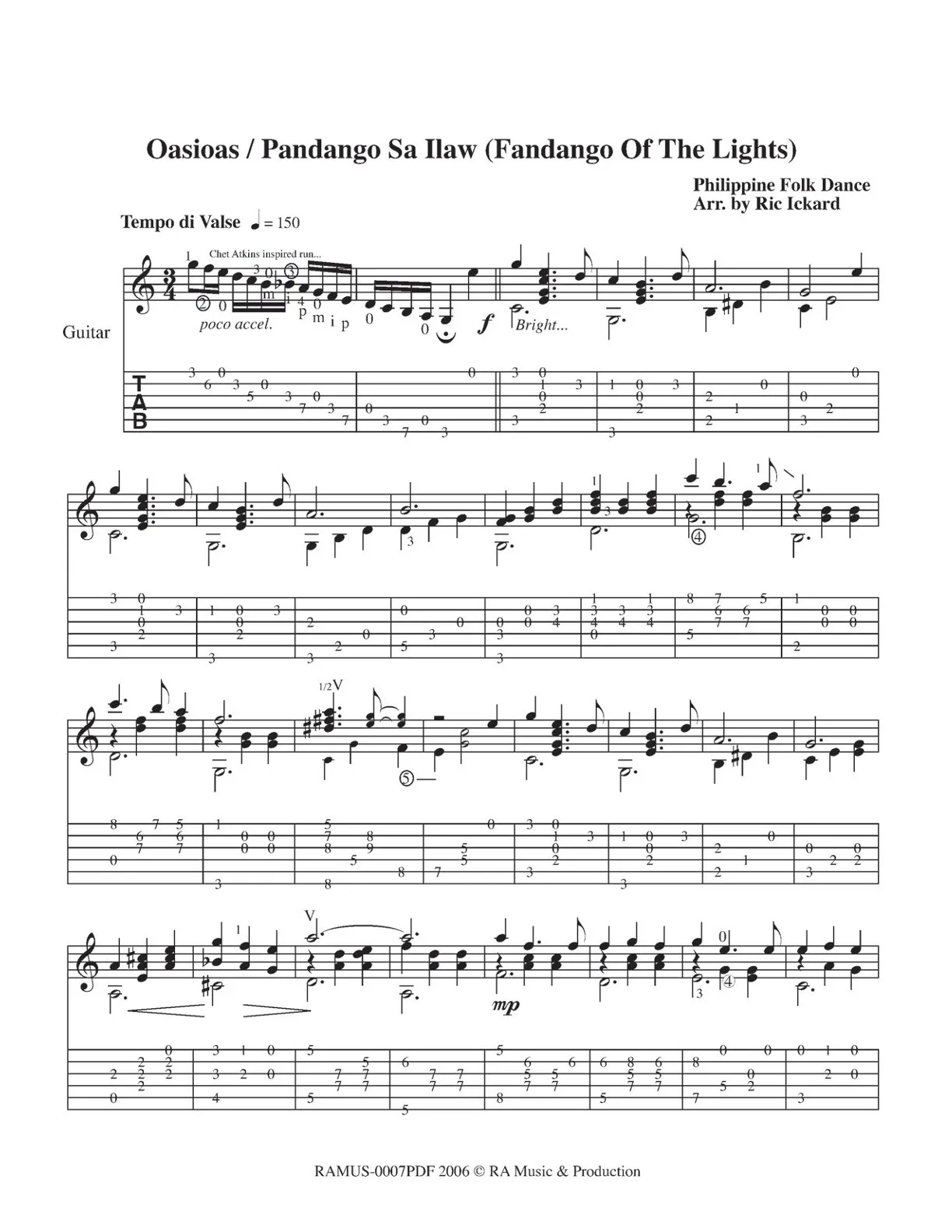
OASIOAS / PANDANGO SA ILAW
(Fandango Of The Lights)
**Oasioas / Pandanggo sa Ilaw (Fandango of the Lights)** is a vibrant Philippine folk dance that showcases grace, balance, and cultural heritage. Originating from Lubang Island, Mindoro, and also popular in Lingayen, Pangasinan, where it is known as *Oasioas* (meaning "swinging" in the local dialect), this dance is a localized adaptation of the Spanish *Fandango*. It is often performed during festivals, religious rituals, and cultural celebrations, reflecting Filipino traditions and colonial influences.
The dance is characterized by its playful and sprightly movements in 3/4 waltz time, simulating fireflies at dusk through the use of three oil lamps (*tinghoy*) or candles in glasses, which dancers balance—one on the head and one on the back of each hand. In the Pangasinan *Oasioas* version, the dance celebrates fishermen’s bountiful catches, with performers swinging and circling lighted lamps after drinking wine, symbolizing joy and gratitude. The choreography includes native waltz steps, graceful hand and arm movements, and synchronized partner interactions, often depicting courtship.
Typically performed by couples in traditional Filipino attire, such as *baro’t saya* for women and *barong tagalog* for men, the dance is accompanied by rondalla music, with a notable composition by National Artist Antonio R. Buenaventura, written in the 1930s. The *Pandanggo sa Ilaw* is a highlight of Filipino cultural performances, famously showcased by groups like the Bayanihan Philippine National Folk Dance Company, and remains a beloved symbol of Filipino resilience and artistry.